
Background
Synopsis: Mining has shaped human civilization for tens of thousands of years, providing the metals, fuels, and materials that shape modern life. Obtaining and processing these minerals varies, yet each results in environmental and social impacts.
Humans and Resources
- Nearly everything we use comes from one of three sources: materials grown from plants and animals, materials refined from oil and gas, or materials mined from the Earth. Metals, stone, and minerals extracted through mining form the foundation of buildings, transportation, and modern technology.
- Understanding how mining developed, how it works today, and what impacts it carries helps explain how societies have built the world around us.
Mining Throughout History
- Mining has deep roots throughout history, stretching back to the first humans who chipped stone tools from the Earth.
- The earliest known mines, located in southern Africa, dug coal tens of thousands of years ago.
- Early civilizations prized native metals like gold and copper that could be found in their natural metallic state.
- Flint and limestone quarries provided fire-starters and materials for tools and weapons.
- Around 6,000 years ago, people learned to heat and separate metals from ore and mixing metals, creating alloys, launched the Bronze Age.
- Ancient cultures rose and fell with the control of mining to fuel trade and furnish armies.
- The Industrial Revolution mechanized mining, opening vast new deposits and powering the modern world.
Mining Methods
- Mineral resources today are mined by one of four primary methods: surface mining, underground mining, placer mining, or in-situ mining. Each mining method reflects a balance between geology, economics, safety, and environmental risk.
- Surface mining removes minerals by clearing the material above them called overburden which is the soil, rock, and vegetation that is on top of an ore body or coal seam.
- Miners create a broad, open excavation called an open pit or open-cast mine.
- Because the deposits are near the surface, this method requires less digging than underground mining, but it can cover large areas and needs significant space as pits expand outward.
- Open-pit mining creates a large, terraced hole in the ground, often with stepped sides, or benches, to prevent collapse. This is often used for metals like copper or gold.
- Strip mining removes long, narrow strips of land to access flat, layered deposits such as coal.
- Mountaintop removal is also used to access coal seams and removes the top of a mountain to reach the coal below.
- Some surface mines use a technique called heap leaching to extract metals from low-grade ore.
- Crushed ore is piled into large heaps and sprayed with chemical solutions, often containing cyanide or sulfuric acid.
- These solutions dissolve metals such as copper or gold, creating a metal-rich liquid that is collected and processed.
- Managing water is essential as rain and groundwater can flood excavated land. Pumps and drainage systems are used to keep mines dry.
- Safety is critical, even when mining close to the surface. Engineers design stable slopes and miners use heavy machinery to move both valuable ore and waste rock.
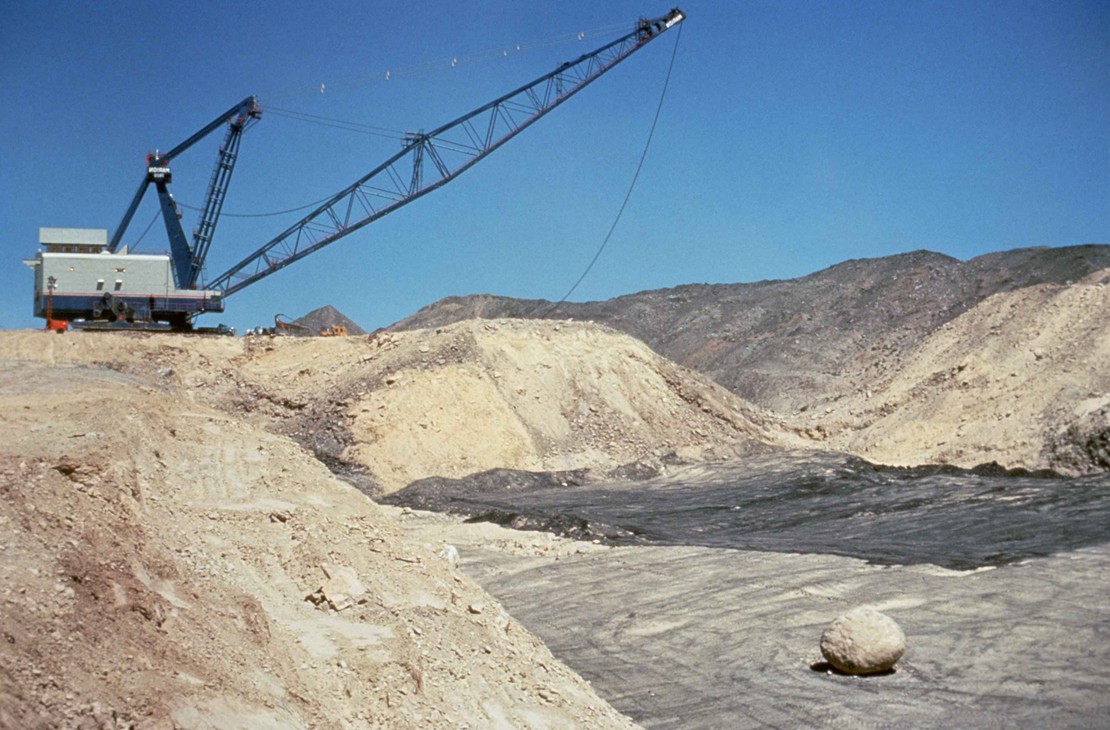
Credit: By Allen Arthur, U.S. Fish and Wildlife Service - http://www.public-domain-image.com/public-domain-images-pictures-free-stock-photos/miscellaneous-public-domain-images-pictures/strip-mining.jpg, Public Domain, https://commons.wikimedia.org/w/index.php?curid=24926259
- Underground mining is used when valuable minerals lie deep beneath Earth’s surface, beyond the reach of surface methods.
- This method requires detailed mapping and analysis of the rock layers to locate the ore and design safe, stable passages.
- It begins with development mining, where rock and other non-valuable material are removed to reach the ore body deep below.
- Once the deposit is exposed, production mining extracts the target minerals.
- Miners use shafts and tunnels, either vertical or horizontal, depending on the depth of the ore and the geology of the area.
- Tunnels can extend thousands of feet underground and demand specialized equipment, ventilation, and safety systems.
- Common underground targets include metals like gold, copper, nickel, and zinc, as well as coal, diamonds, and other precious minerals found deep in rock layers.
- Highly trained engineers and geologists are essential to plan the mine, monitor conditions, and prevent accidents in this complex environment.
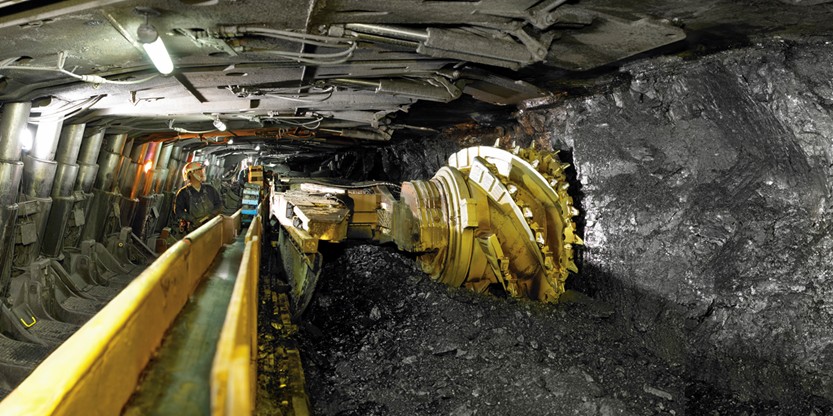
Equipment has replaced miners in this modern longwall underground coal mining operation located in northwest Colorado.
Credit: By Peabody Energy, Inc. - Provided by Peabody Energy, CC BY-SA 4.0, https://commons.wikimedia.org/w/index.php?curid=37744315
- Placer mining recovers minerals that have weathered out of rock and collected in loose sediments like sand and gravel.
- It often takes place in riverbeds, stream beds, beaches, and other areas where flowing water naturally concentrates heavy minerals.
- Successful placer mining begins with locating spots where minerals are concentrated, which requires surveying and understanding how water sorts sediments.
- Specialized equipment, from simple pans to larger mechanical separators, helps extract minerals efficiently from sand and gravel.
- Miners separate valuable grains from sediments by rinsing, sifting, or using gravity to settle heavier particles.
- Placer methods are commonly used to recover gold, platinum, tin, gemstones, and other dense materials. More than half the world’s titanium production is done by placer mining.
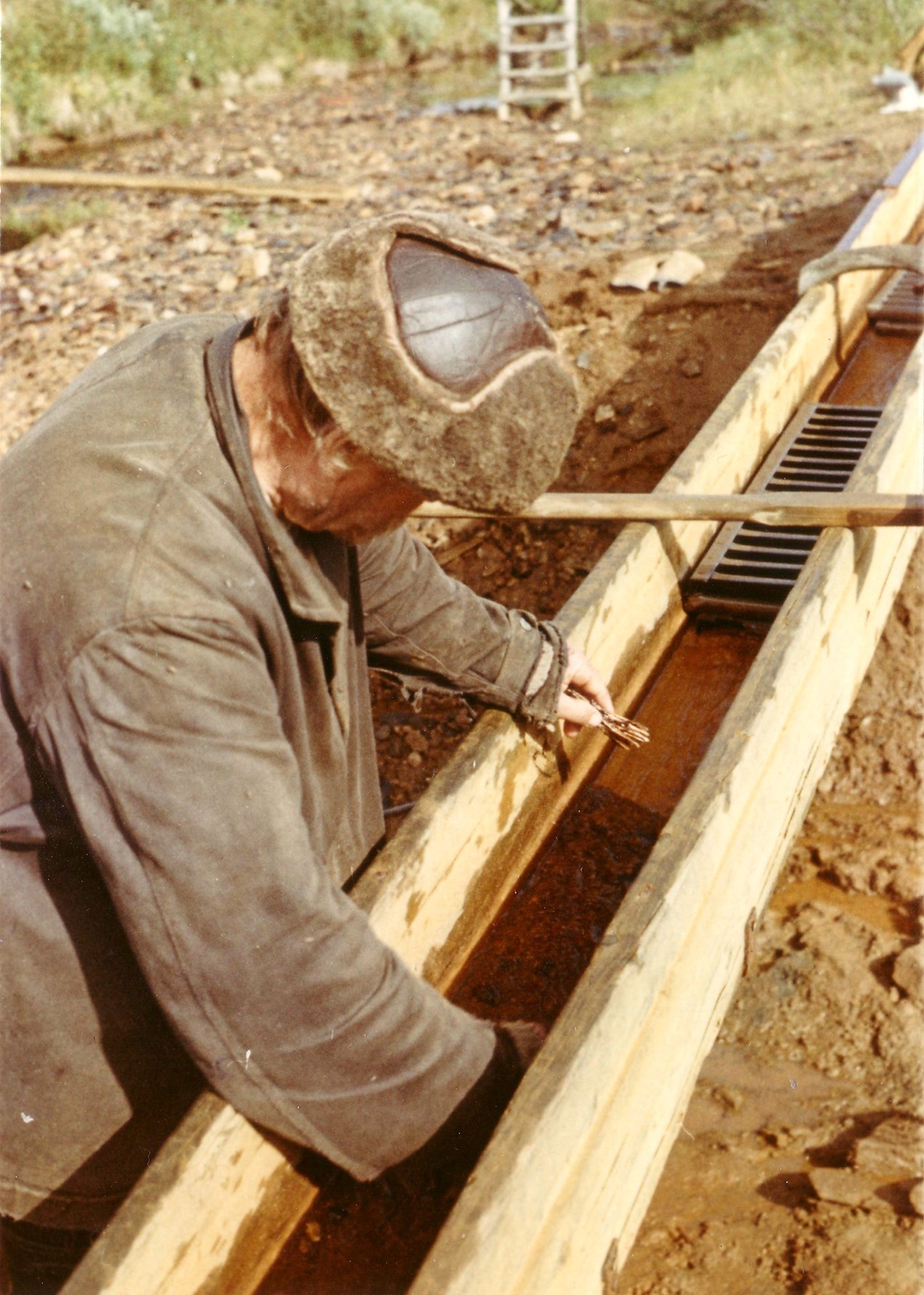
A miner uses a sluice to wash gold from sediment in 1960. Modern placer mining uses larger, mechanized sluices and gravity systems to do the same work.
Credit: By Mirdsson2 - Own work, CC BY 3.0, https://commons.wikimedia.org/w/index.php?curid=4350754
- Some minerals can be extracted without digging up the rock around them, using a process called in-situ or solution mining.
- Instead of removing ore, miners pump special solutions underground to dissolve the minerals where they sit, then pump the mineral rich “pregnant solution” back to the surface.
- This method is commonly used for uranium and can work for other minerals that dissolve easily in suitable liquids.
- The biggest challenge is protecting nearby groundwater, since the chemicals used to dissolve minerals must not contaminate surrounding aquifers.
- Only deposits with rock that liquids can move through and minerals that dissolve safely, are suitable for this method. Extensive testing is required before extraction begins.
- Deep drilling equipment and corrosion-resistant pipes are needed to reach the deposit and safely pump fluids in and out. These, along with systems to separate and recover the dissolved minerals at the surface are needed for successful in-situ mining.
-
The right mining method depends on where the minerals are located, how they occur in the rock, and whether they can be safely dissolved, tunneled to, or sifted from sediments.
- Deposit size and economics matter too. Large, shallow deposits suit open pits, while smaller or very deep deposits may use underground or in-situ techniques to avoid unnecessary excavation.
Processing Ores
- Mining the rock and ore is not enough to obtain the metals that we desire. After ore is removed from the ground, it must be processed to separate valuable minerals from the surrounding rock.
- Processing often creates the largest volumes of waste and uses the most energy and water.
- Crushing and grinding break big chunks of rock into fine particles, freeing mineral grains hidden inside.
- Once the ore is ground, workers use physical and chemical processes to sort minerals from waste rock.
- Gravity separation uses density differences to separate heavy minerals like gold or tin from lighter sediments.
- Magnetic separation pulls iron-rich minerals such as magnetite from crushed ore using powerful magnets.
- Flotation attaches air bubbles to mineral particles, like copper sulfides, so they can float and can be skimmed off, leaving waste behind.
- The concentrated minerals then move to refining, where heat, chemistry and electricity remove remaining impurities and produce pure metals.
- Smelting melts concentrated ore at high temperatures to allow valuable metals to sink or separate from impurities. This is a key step for metals like zinc and lead.
- Electrolysis uses electric current to extract and purify metals such as aluminum and copper, plating pure metal onto a surface.
- These steps turn common-looking rock into essential materials for wires, electronics, structures, and countless modern technologies.
- China now controls an average of 80% of the processing of critical minerals worldwide
Impacts of Mining on the Environment
- Mining and processing unlock essential minerals, yet every stage of that journey carries impacts on ecosystems and the people who live nearby.
- Mining operations often generate large volumes of tailings and waste rock, which can be acidic or toxic and, if leaked or poorly managed, cause long-term contamination of soil and water systems.
- Mining can consume enormous amounts of water and disrupt local hydrology, especially in arid or sensitive regions. This excessive use of water threatens fresh water supplies for surrounding communities.
- Large-scale land clearing, habitat-destruction and deforestation often accompany surface and open-pit mining, reducing biodiversity and damaging ecosystems.
- Dust, heavy metals, and chemical pollution from mines can degrade air quality and post health risks to nearby workers and communities, including miners’ families.
Impacts of Mining on Communities
- Mining can also affect nearby communities, especially in regions where minerals are extracted for international markets and shipped through global supply chains. Reported challenges include poor working conditions, displacement of local residents, and limited economic benefit to the people living closest to the mines.
- Mining for “critical minerals” required by modern technologies adds pressure to extract quickly and at large scale. This risks weaker oversight and increased community and environmental stress.
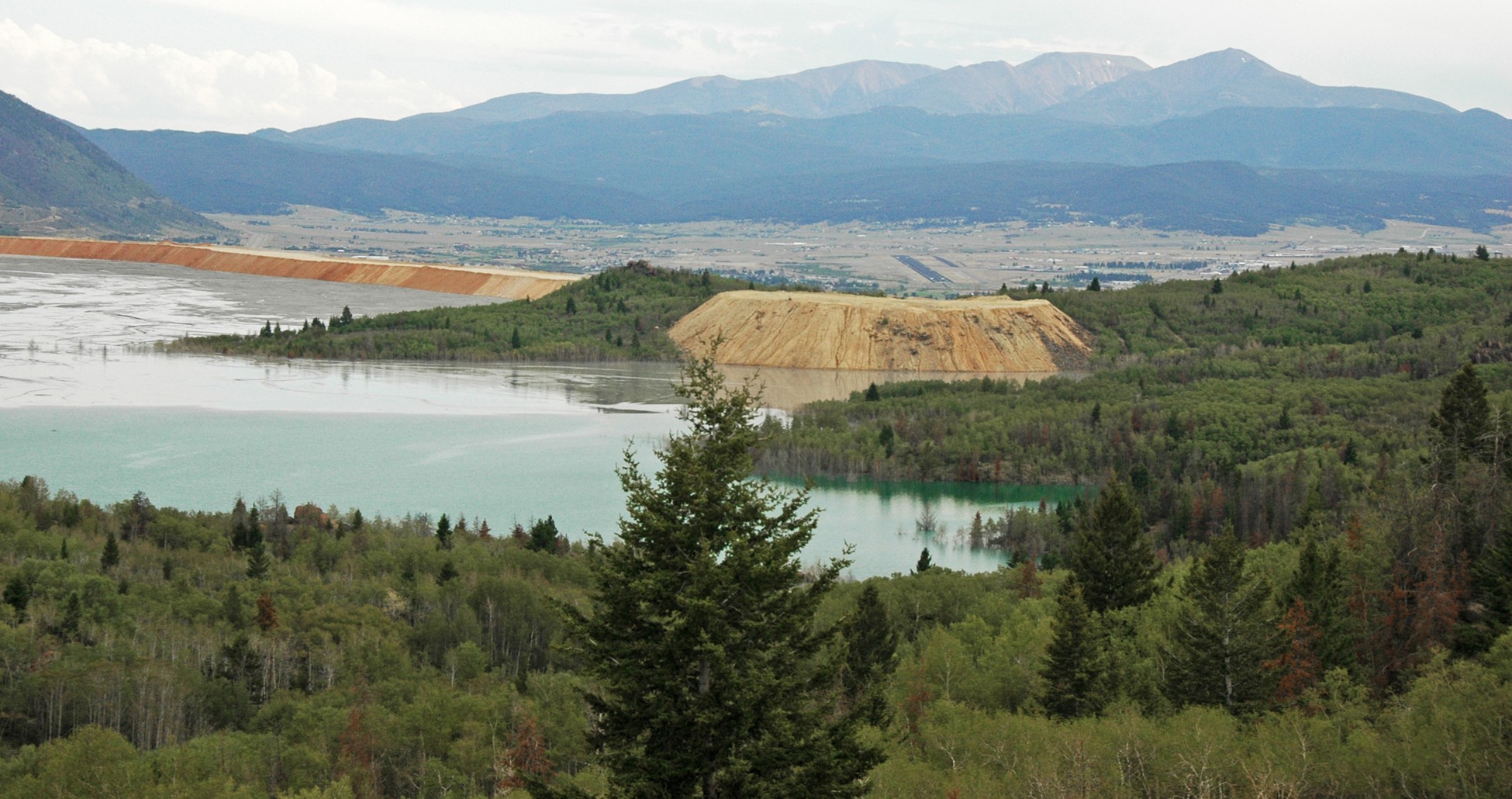
The Yankee Doodle tailings pond beside the Continental Mine in Butte, Montana spans more than 2.5 square miles and is held back by a 600-foot-tall earthen dam, reflecting the scale of waste produced from mining copper, gold, silver, and other metals in this historic district.
Credit: By James St. John - https://www.flickr.com/photos/47445767@N05/51139430590/, CC BY 2.0, https://commons.wikimedia.org/w/index.php?curid=104408784
Mining and the Road Ahead
- Environmental and community impacts from mining vary widely around the world, shaped by local geology, water availability, and the methods used to extract and process minerals.
- Differences in site planning, monitoring, and long-term management influence how risks are controlled and how surrounding communities are affected.
- Mining has always involved trade-offs. Materials pulled from the Earth have built cities, powered economies, and enabled technological progress, while also reshaping landscapes and affecting communities and ecosystems.
- The impacts have become harder to ignore as our demand for minerals grows to support the expanding communication, transportation, and energy systems.
- Understanding how mining works today, and where its challenges exist, is essential to shaping what comes next.
Episode Script
Today we make stuff in three ways. Plants and animals make our food, wood and fiber. Oil and gas make plastic, fuels, chemicals and clothing.
And rocks, dug out of a mine, become metal, concrete and stone – which make our buildings and roads, planes, trains and automobiles, energy infrastructure and much more.
By weight and value, our most important mined product is coal – which makes about 1/3 of global electricity.
Coal was also the first thing humans mined at scale, 20,000 years ago in South Africa.
Around 6,000 years ago, we figured out how to smelt metal out of ore. Copper, gold, silver, tin and iron shaped civilizations in the Bronze and Iron ages, making weapons and tools, art and currency.
Today, we mine in several ways. Surface mines dig out shallow ore deposits or stone.
Underground mines dig tunnels to reach deeper reserves.
Placer mining separates minerals from erosion runoff.
Solution mining dissolves minerals in place with a solvent, which is then pumped to the surface and purified.
All forms of mining have environmental impacts. Surface mines can deforest large areas and disrupt ecosystems. Waste rock, and polluted water and air can impact local communities.
In another EarthDate, we talk about ways to address these impacts, as we ramp up mining to meet the demands of new technology. I’m Scott Tinker.