
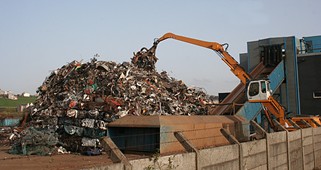
Credit: By Metal Recycling by Anne Burgess, CC BY-SA 2.0, https://commons.wikimedia.org/w/index.php?curid=107630570
Background
Synopsis: Cities hold valuable metals in discarded electronics, vehicles, and buildings, creating a new resource known as urban mining. Recovering these materials uses far less energy and causes less environmental harm than traditional mining, though challenges in processing complex waste remain.
A New Type of Mining
- Beneath our cities lies a new kind of mineral deposit. It is not buried in rock, but in the waste we’ve left behind.
- Urban mining recovers valuable metals and materials from discarded products, construction debris, and other urban waste streams.
- Instead of digging new holes in the ground, this approach “mines” what we’ve already extracted and used.
- It aims to reduce environmental impacts, conserve resources, and build more sustainable material cycles.
- As cities grow, they have become some of the richest sources of metals on Earth.
Traditional Mining: High Cost and Heavy Impacts
- For thousands of years, humans have mined Earth for the metals needed to build and power society.
- This involves removing and processing large volumes of rock, using lots of energy and water, and leaves significant waste behind.
- Tailings, the finely crushed rock and chemical residues left after processing, often contain heavy metals and other contaminants.
- They are stored in large impoundments, engineered dams designed to contain millions of tons of waste, which can pose long-term safety and environmental risks if they leak or fail.
- Mining also contributes to deforestation, water pollution, carbon emissions, and geopolitical tensions over resource access.
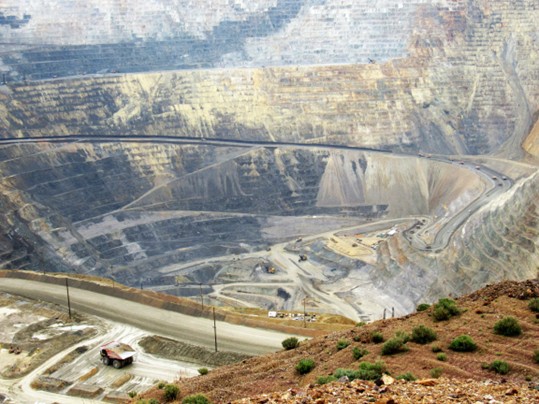
The vast Bingham Canyon Mine in Utah, one of the world’s largest open-pit copper mines, illustrates the scale and environmental impact of traditional mining while contrasting with urban mining’s effort to recover metals from materials already in use.
Credit: By Farragutful - Own work, CC BY-SA 4.0, https://commons.wikimedia.org/w/index.php?curid=79162587
The Emerging Resource: Materials Already in Our Cities
- As societies urbanized, the concentration of metals in cities grew to rival, and sometimes exceed, natural ore deposits.
- A ton of discarded smartphones can contain 350 grams of gold, more than 80 times the gold in a ton of gold ore!
- Buildings, vehicles, appliances and infrastructure contain large amounts of copper, steel, aluminum, and other useful materials.
- Recognizing this, researchers developed the concept of urban mining in the 1980s, now widely embraced worldwide.
What Urban Mining Targets
- The “ore” of urban mining comes from a wide range of discarded or aging materials:
- Electronic waste (e-waste): phones, computers, circuit boards, and batteries containing gold, silver, copper, palladium and rare earth elements.
- Construction and demolition debris: wiring, steel beams, rebar, copper pipes and aluminum framing from renovation or demolition.
- Vehicles and appliances: abundant steel, aluminum, and plastics, and other metals in cars, refrigerators, and machinery.
- Catalytic converters on car exhaust systems contain valuable platinum, palladium, and rhodium.
- Industrial waste streams: fly ash, slag, and dust from manufacturing that can contain recoverable minerals.
- Landfills: long-term stores of metals and materials, viewed by some as potential future resource banks.
How Urban Mining Works
- Urban mining begins at the waste stream.
- Materials are collected through recycling programs, take-back systems, or demolition sorting.
- They are sorted and pre-processed using magnets, AI-assisted sensors, and density-based techniques.
- Valuable components are extracted through a combination of:
- Mechanical methods which shred and physically separate components.
- Chemical processes that use controlled solutions to dissolve and recover specific metals.
- Emerging biological techniques that rely on microbes to leach metals from waste with minimal pollution.
- The recovered materials are refined to high purity, allowing them to re-enter manufacturing.
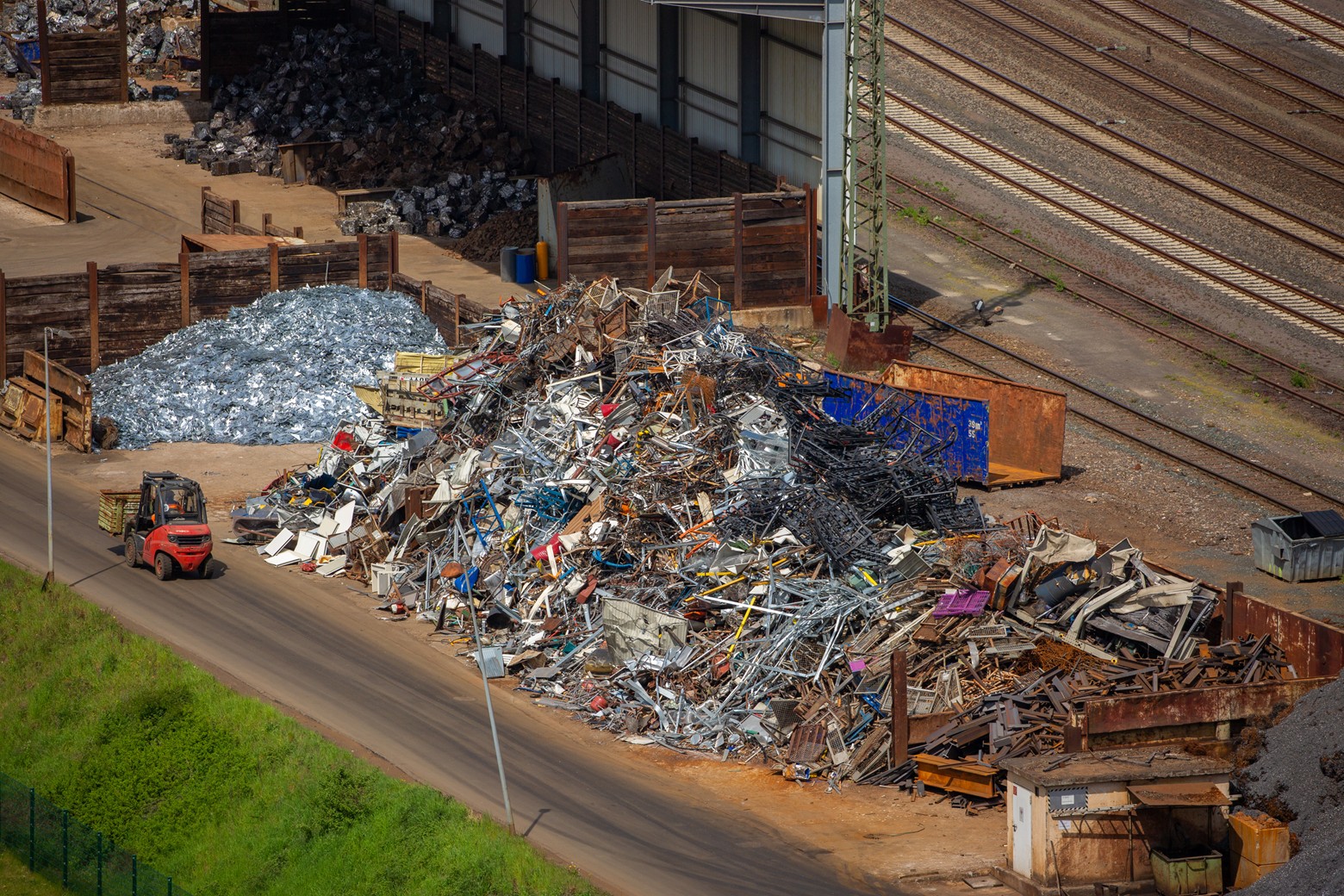
Neatly sorted piles of metal scrap, separated by magnets, sensors, or careful manual sorting, show how reclaimed materials can be organized and reused through urban mining.
Credit: By Otto Domes - Own work, CC BY-SA 4.0, https://commons.wikimedia.org/w/index.php?curid=154623457
Why It Matters
- Urban mining conserves resources by reclaiming metals already in circulation, rather than extracting new ones.
- Processing recycled metals uses far less energy than producing metals from raw ore.
- It reduces pollution by avoiding new tailings, lowering emissions, and minimizing landscape disturbance.
- Turning discarded materials into usable resources supports sustainability and reduces dependence on imported or limited raw materials.
Challenges and Limitations
- Despite its promise, urban mining does face several hurdles that make it difficult to scale and sustain on a global level.
- Many modern products are complex combinations of metals, plastics, adhesives, and coatings, making separation difficult.
- Some electronics contain toxic substances that require careful handling to avoid environmental and health risks.
- For certain materials, recovery costs remain higher than traditional mining, especially when commodity prices are low.
- Recycling infrastructure is uneven worldwide, limiting efficient collection and processing.
- Informal recycling systems in some regions expose workers to hazardous conditions and cause significant pollution.
- Continued advances in product design, technology, and regulation are needed to expand the viability of urban mining.
Connection to the Circular Economy
- As researchers and industries seek long-term solutions, urban mining is increasingly recognized as part of the broader shift towards a circular economy.
- A circular economy keeps materials in use for as long as possible through smarter design, repair, reuse, and remanufacturing.
- It aims to prevent waste before it forms, rather than only recovering materials at the end of life.
- Urban mining fits into this system by reclaiming metals and minerals that have already slipped through earlier loops of reuse or repair.
- Together, these strategies help reduce the need for new extraction and promote continuous material circulation.

A comparison of a linear economy, where resources move in a straight line from extraction to disposal, and a circular economy, where products are designed for reuse, repair, and recycling to keep materials in continuous use.
Credit: By Original: PennineFoxhound Vector: ClonewayxCatherine Weetman, CC BY-SA 4.0 <https://creativecommons.org/licenses/by-sa/4.0>, prostřednictvím Wikimedia Commons - Own work based on: Linear versus circular.jpg by PennineFoxhound, CC BY-SA 4.0, https://commons.wikimedia.org/w/index.php?curid=108232140
Technology and Innovation
- Advances in science and engineering are helping urban mining evolve from concept to widespread practice.
- Automation and robotics improve speed and safety of dismantling electronics and vehicles.
- Artificial intelligence enhances sorting by identifying materials by color, density, or chemical signature.
- Bioleaching and advanced solvents offer cleaner ways to extract metals.
- Material passports could one day make record a product’s components for easier recovery.
- Smart urban systems may eventually track materials across a city, making future recovery more efficient.
- As technology, design, and policy continue to advance, cities may become self-sustaining reservoirs of raw materials.
- The future of resource use depends on viewing materials not as waste, but as assets in continuous circulation, turning today’s cities into the mines of tomorrow.
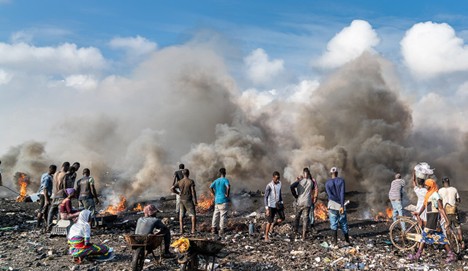
In parts of the world, e-waste is often processed through unsafe methods such as open burning to recover metals. This scene from Ghana highlights the dangers of informal recycling and underscores the need for safer, regulated systems to protect people and the environment while recovering valuable materials.
Credit: By Muntaka Chasant - Own work, CC BY-SA 4.0, https://commons.wikimedia.org/w/index.php?curid=81939788
A Sustainable Future Beneath Our Feet
- When responsibly managed, urban mining reduces emissions, conserves water and prevents hazardous waste from entering the environment.
- Formal recycling programs protect workers and nearby communities while creating jobs and reducing pressure on traditional mining.
- As technology, design, and policy continue to advance, cities may become self-sustaining reservoirs of raw materials.
- The future of resource use depends on viewing materials not as waste, but as assets in continuous circulation, turning today’s cities into the mines of tomorrow.
Episode Script
On another episode, we talk about how mines have a large environmental footprint. Think of a giant pit, with huge machines digging out ore.
By contrast, think of your old smart phone. In one ton of discarded phones there’s 80 times more gold than in one ton of ore.
Electronic waste, like phones and computers, contains gold, silver, palladium and rare earth elements.
Old batteries contain lithium, cadmium and other heavy metals.
Construction and demolition debris contains copper from piping and air conditioning, and steel from rebar and beams.
Old cars and trucks contain steel, aluminum and other metals.
This can make cities a repository of metals more concentrated than any mine. And makes this waste the resource for a new industry called ‘urban mining.’
The challenge is gathering that varied waste from across the urban environment, then sorting and disassembling it to be processed. That takes energy, time, labor and money.
But new recycling programs, often powered by AI, sort materials with magnets and robots, then use mechanical shredders and chemical solvents to break them down into simpler components.
Producing metals this way uses less energy and water than mining and processing new ore, with potentially less environmental impact – while also reducing the need for new metals, sometimes imported from unfriendly countries.
In the future, more metal will come from these sources much closer to home. I’m Scott Tinker.