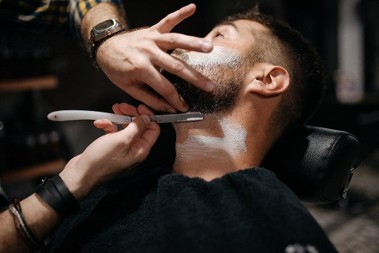
Credit: By Nenad Stojkovic - https://www.flickr.com/photos/nenadstojkovic/48987723271/, CC BY 2.0, https://commons.wikimedia.org/w/index.php?curid=116286199
Background
Synopsis: Long before there were mirrors or metal, humans were shaving. They used shells, stones, and crude tools to remove unwanted hair, especially from the face. Shaving wasn’t a matter of survival but was driven by ritual, identity, and social meaning that still influence us today.
- As early humans adapted to life in hot, open environments nearly two million years ago, they evolved longer legs for endurance and began to lose most of their body hair.
- This hair loss, along with increased sweat glands and darker skin, helped regulate body temperature—likely a key factor driving the evolution of human hairlessness.
- While humans have significantly less hair than our primate ancestors, the body does have some amount of hair, most of which seem to serve specific physiologic functions.
- Body hair retains its role in regulating body temperature.
- Hair on the head shields the scalp from sunlight and helps retain warmth in colder environments.
- Eyelashes act as a barrier to block dust, insects and small debris from reaching the eyes.
- Eyebrows help direct sweat away from the eyes.
- Hair in the armpits helps release scent signals (pheromones) and minimizes skin-on-skin friction during movement.
- Pubic hair offers protection from bacteria.
- Facial hair, especially in men, doesn’t serve a clear physical function. Instead, scientists believe it evolved to send social signals. Beards may have helped attract mates or intimidate rivals by displaying age, status, or strength.
- Despite its symbolic power, early humans also found ways to remove facial hair. Cave paintings from as far back as 30,000 years ago show smooth-faced individuals, suggesting some form of shaving or plucking.
- Without metal tools, people used sharpened flint and obsidian, or even animal teeth and shells to scrape or pluck hair from the face. These methods were crude, but they worked and may have helped reduce lice or skin irritation.
- Despite its symbolic power, early humans also found ways to remove facial hair. Cave paintings from as far back as 30,000 years ago show smooth-faced individuals, suggesting some form of shaving or plucking.
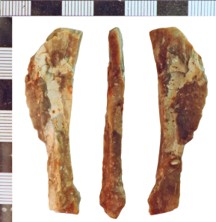
Credit: By North Lincolnshire Museum, CC BY 2.0, https://commons.wikimedia.org/w/index.php?curid=75201109.
- Around 3,000 BC, Egyptians became the first known civilization to embrace shaving as a daily practice. They used copper razors, developed from early metalworking skills, to remove hair from their faces and bodies.
- In Egypt’s hot, dry climate, hair was seen as unclean. Wealthy Egyptians shaved regularly, using razors or harsh mineral-based creams made from substances like quicklime and arsenic. Hairless skin became a sign of status and refinement.
- Despite the obsession with hairlessness, power was still symbolized by beards, leading male and female pharaohs to wear stylized false beards to project divinity and authority..
- In ancient Greece, facial hair had the opposite meaning. Beards represented strength, honor, and masculinity. A smooth face could be seen as a sign of weakness or immaturity.
- But around the 4th century BCE, Alexander the Great changed things. He ordered his soldiers to shave their beards to prevent enemies from grabbing them in battle. This military strategy sparked a cultural trend.
- The Romans followed suit. Shaving became a daily ritual among upper-class men. Some had personal servants for grooming, while others visited public grooming shops called tonsors. A boy’s first shave marked a major rite of passage.
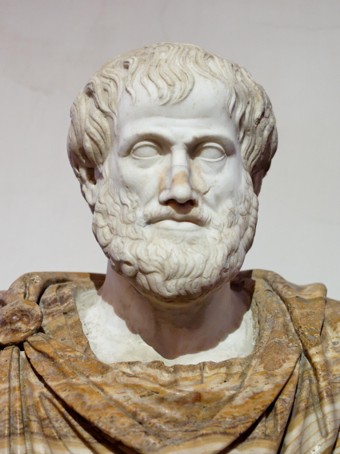
Credit: By After Lysippos - Jastrow (2006), Public Domain, https://commons.wikimedia.org/w/index.php?curid=1359807
- During the Middle Ages and into the early modern period, facial hair trends shifted with religion and politics.
- Catholic clerics were often required to shave to distinguish themselves from Jews, Muslims, and Orthodox Christians.
- In the 1500s, Protestant reformers wore beards to signal their break from Catholic tradition. In some periods, kings or popes brought beards in or out of fashion simply through personal style.
- As metallurgy advanced, so did razors. In 17th-century England, craftsmen in Sheffield produce straight razors from high-quality carbon steel known as “Sheffield silver steel.” These blades were durable, rust-resistant, and beautifully polished.
- In 1769, French barber Jean-Jacques Perret introduced the first safety razor. He added a wooden guard to the blade to reduce the risk of cutting the skin, an important step toward safer, more accessible shaving.
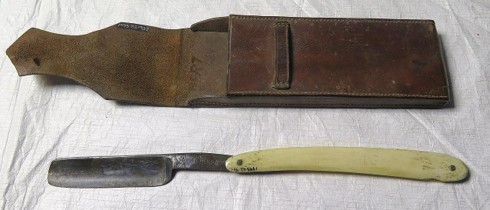
Credit: By Auckland Museum, CC BY 4.0, https://commons.wikimedia.org/w/index.php?curid=64782993
- The next big breakthrough came in 1901, when King C. Gillette developed the first disposable razor blade. It was thin, sharp, and replaceable, made of finely honed steel, mounted in a reusable handle.
- Gillett’s idea revolutionized personal grooming. Shaving was no longer a skilled chore, and it became a daily routine for millions of men around the world.
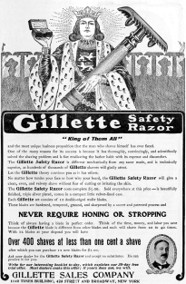
Credit: By Gillette Safety Razor Company - The Literary Digest Volume 31, 1905., Public Domain, https://commons.wikimedia.org/w/index.php?curid=74964186
- In the 1920’s, Canadian inventor Jacob Schick introduced the electric razor. His design used a small motor to move the blades, offering a quick and convenient way to shave without water or lather.
- By the 1930’s electric razors were widespread, and shaving had become a symbol of modern hygiene and professionalism. For many, a clean-shaven face was linked to success, confidence, and social acceptance.
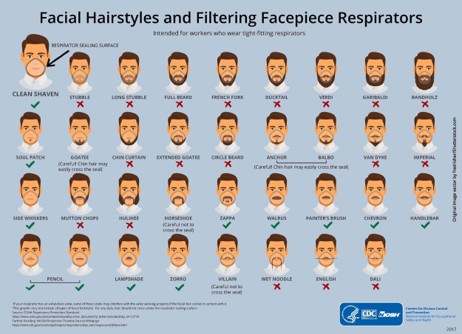
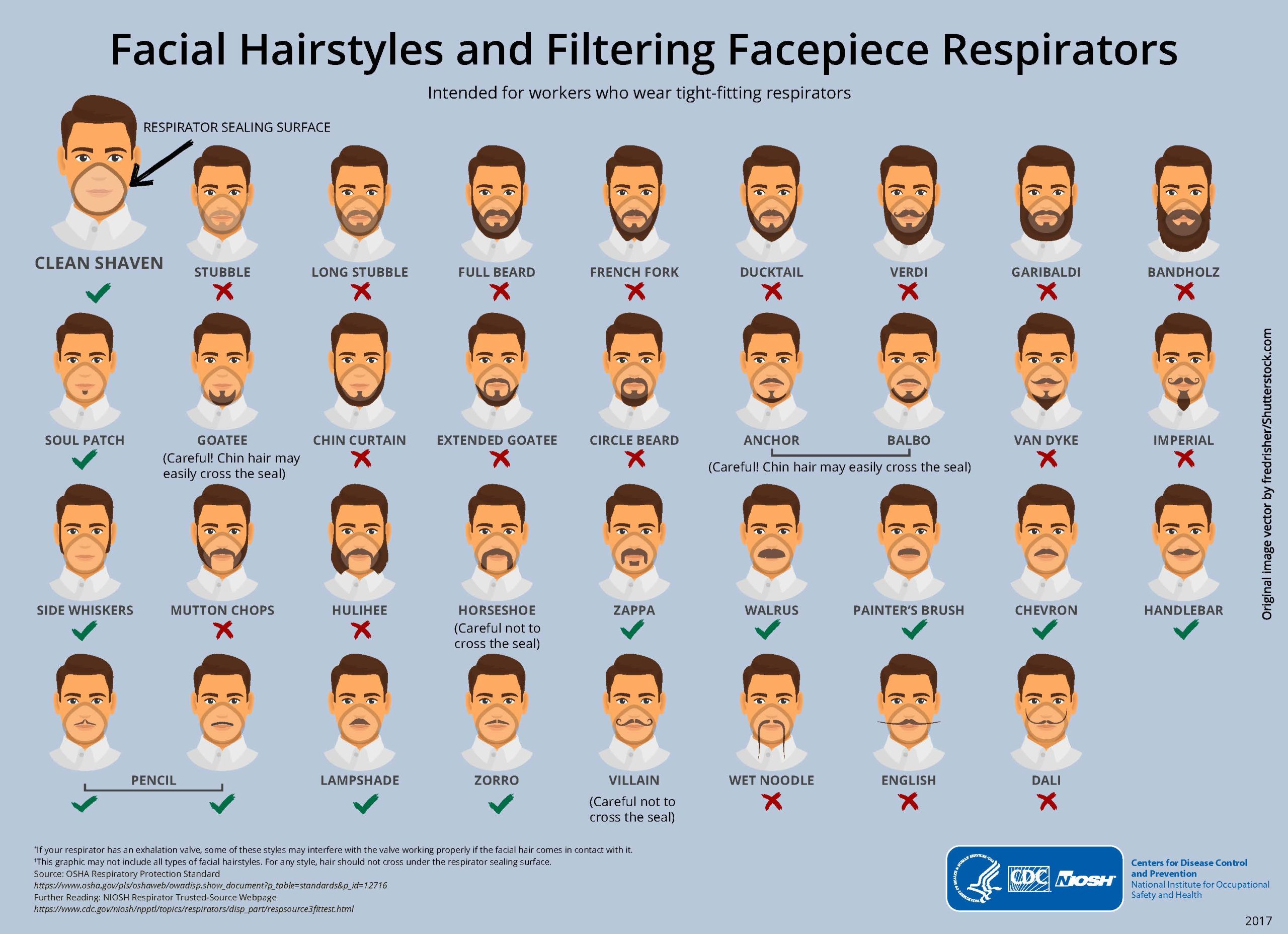
Credit: CDC.gov
- In recent years, though, beard culture has made a comeback. Beards are now seen as stylish, individualistic, and sometimes even sustainable.
- Modern consumers are also reconsidering their shaving tools. Billions of plastic cartridges are thrown away each year, many of which can’t be recycled.
- As a result, traditional tools like metal safety razors and straight razors are gaining popularity again. This is not just for their nostalgic appeal, but because they last longer and reduce waste.
The stubble struggle is more than a grooming habit. It’s a story of evolution, culture, and our ongoing use of Earth’s resources to shape how we present ourselves to the world.
“There is always a period when a man with a beard shaves it off. This period does not last. He returns headlong to his beard.”
-Jean Cocteau, 20th century French poet and artist
Episode script
Humans have lost most of our body hair, but the beard has stubbornly remained – though anthropologists can find no function for it.
Perhaps that’s why men have been grooming it, or removing it, for thousands of years.
Early cave paintings show men with smooth faces.
Archeologists have found flint ‘razors’ they may have used to shave. And shell ‘tweezers’ they may have used to pluck off their beards. Ouch!
The Egyptians were first to engage in elaborate shaving rituals.
Facial hair was considered unclean, and men used copper razors or caustic chemicals to burn off their beards. Ouch again!
Centuries later, Alexander the Great’s soldiers wore beards -- until he ordered them gone.
Greeks reversed that tradition. For them, beards represented maturity and wisdom.
The Romans reversed things again, and civilized men shaved or went to barber shops.
Through the Middle Ages, beards came and went with the styles of influential leaders.
Christian priests remained clean-shaven, to separate themselves from rabbis and Muslim clerics, who often had beards.
In the 20th century, in the U.S. and Europe, shaving became synonymous with uprightness and business success.
In the 21st century, things changed again, as beards reflect individual style and even environmental sustainability – avoiding the waste of disposable shaving products.
If you’re wondering ‘to beard or not to beard,’ there’s no right answer. Wait a while and styles may change anyway!