
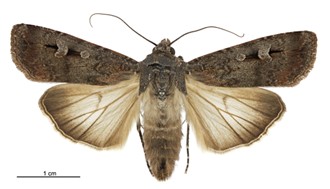
Credit: By Birgit E. Rhode, Landcare Research New Zealand Ltd. - http://www.landcareresearch.co.nz/information-for/citizen-science/shedding-light-on-the-night/identification/image-gallery, CC BY 4.0, https://commons.wikimedia.org/w/index.php?curid=54970768
Background
Synopsis: Bogong moths use maps of the night sky as well as the Earth’s magnetic field for navigation. This rare dual system guides their epic migration, sustaining alpine ecosystems and Indigenous traditions, though their future in increasingly uncertain.
Creatures on the Move
- Animals, birds, and insects are constantly on the move. Whales swim across oceans, birds fly across continents, and butterflies flutter across forests. But how do they know where to go?
- Many animals follow migration patterns that often span thousands of kilometers with remarkable accuracy.
- While many species rely on one method of navigation, the bogong moth is exceptional for using two simultaneously.
- The story of the bogong moth (Agrotis infusa) migration highlights nature’s remarkable solutions and the challenges these insects now face in a changing world.
Methods of Navigation
- Nature has equipped its many travelers with built-in maps, using magnetism, landmarks, and even the night sky to guide their journeys.
- Some species navigate by recognizing coastlines, rivers, mountains, or even scents.
- Some turtles and salmon detect chemical cues or smells to guide them to nesting and egg-laying sites.
- Desert ants use visual memories and the position of the sun to guide them between food and nest.
- Many species use Earth’s magnetic field like a compass as explained in ED108 Magnetoreception.
- Research shows that some birds can sense magnetic fields through specialized proteins in their eyes.
- Monarch butterflies rely on magnetics during their annual migration to Central America.
- Sea turtles famously imprint on their natal beach using the magnetic field.
- Some creatures rely on the clear night sky and consistent celestial patterns for navigation.
- Migratory birds like indigo buntings orient by star patterns.
- Some dung beetles use the Milky Way to roll their food balls in a straight line.
- While each of these are excellent maps, they do have limitations.
- Magnetics provides direction but not precise location.
- Star maps could be blocked by clouds or washed out by moonlight.
- Landmarks are not available in all locations or at night unless animals have adapted night vision.
- Some species navigate by recognizing coastlines, rivers, mountains, or even scents.

Credit: By Thomas Steiner - File:Australia_map.svg, CC BY 2.5, https://commons.wikimedia.org/w/index.php?curid=19491147
Ordinary and Amazing Moth
- The bogong moth may look ordinary, but it undertakes one of the most remarkable migrations for insects.
- The bogong is a small, brown-gray moth that is nocturnal and can be found across much of Australia.
- Every spring, millions of them travel up to 1000 km (600 miles) from lowland breeding grounds to cool alpine caves of the Snowy Mountains, located in southeast Australia.
- They travel exclusively at night across barren plains and forest. Swarms are so large that radar may detect them as moving rain clouds.
- The alpine caves provide a refuge from summer heat and predators. Throughout much of their time in the caves, the moths enter a torpid or dormant state, conserving energy.
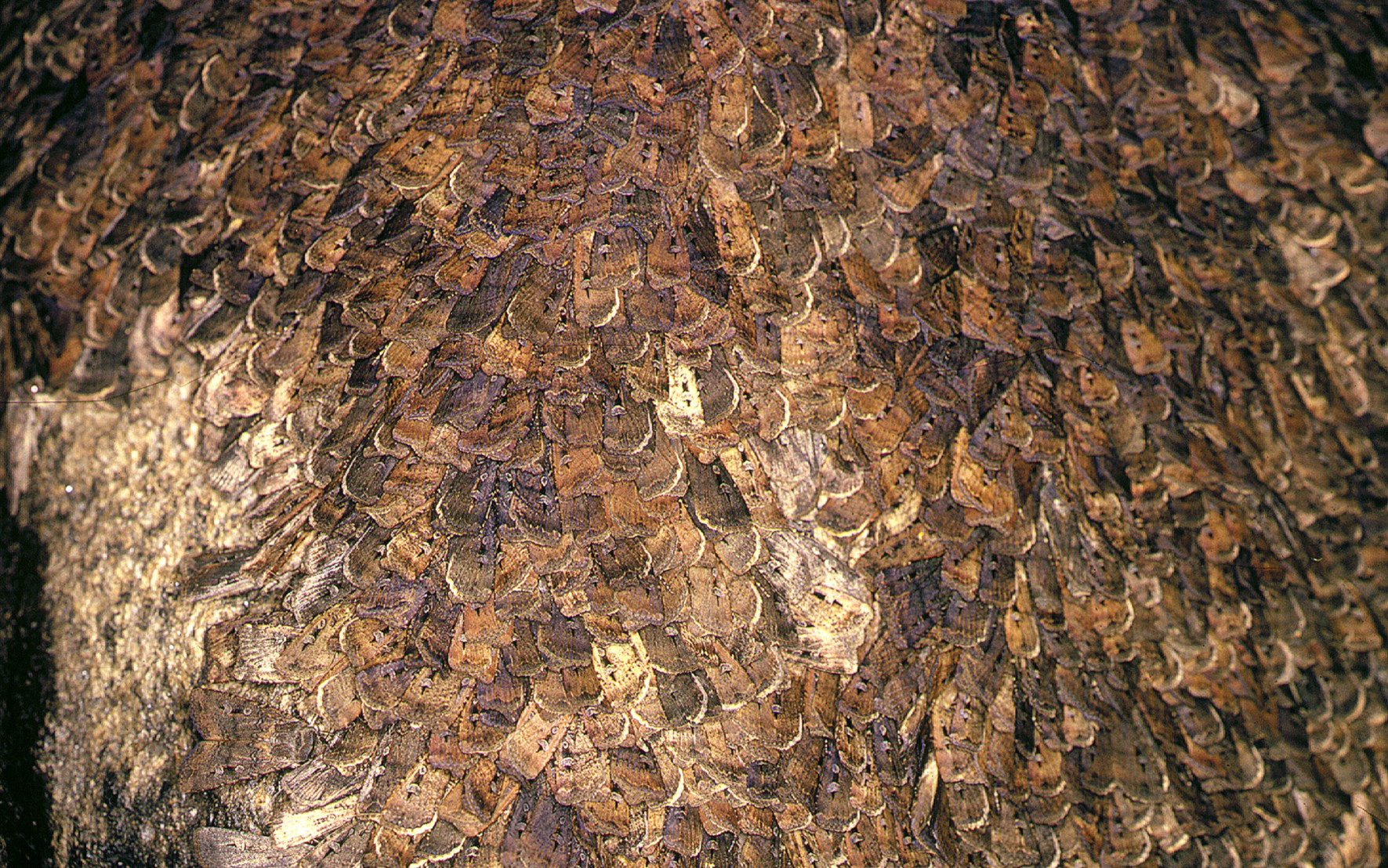
Credit: By CSIRO, CC BY 3.0, https://commons.wikimedia.org/w/index.php?curid=35432892
Testing the Limits
- Scientists were interested to find out how these small insects find the caves so far away.
- Researchers collected migrating bogong moths in spring and autumn, then placed them in a lab flight arena equipped with magnetic coils and a projected starry sky.
- By nullifying Earth’s magnetic field, they confirmed moths could orient using only the stars. They followed their inherited migratory direction, reversed it when the star map was rotated, and became disoriented when the stars were randomized.
- Outdoors under the natural night sky, moths stayed oriented even on cloudy nights, showing they could also rely on Earth’s magnetic field when stars were obscured.
- These results reveal bogong moths use two complementary maps, both magnetic and stellar, giving them a robust, reliable navigation system.
- This is the first known instance of a dual-navigation system being used by an invertebrate. With a brain one-tenth the size of a grain of rice and eyes with a diameter of a single-human hair, this is truly remarkable.
- Future studies aim to pinpoint the exact sensory mechanisms moths use to detect Earth’s magnetic field and identify which features of the night sky guide their flight.
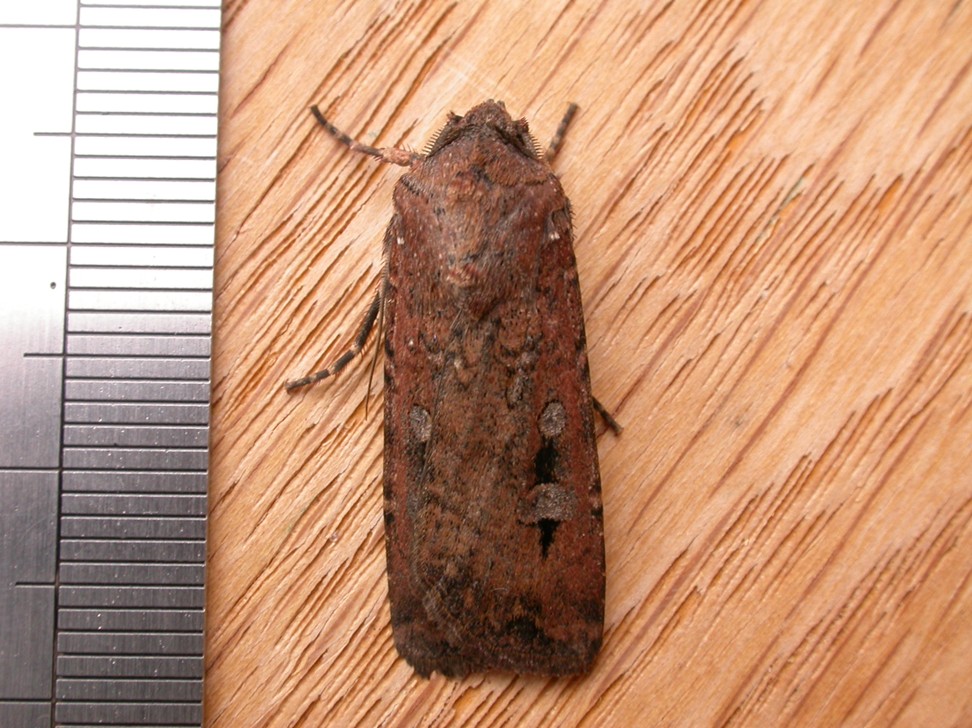
Credit: By Donald Hobern from Copenhagen, Denmark - Agrotis infusa, CC BY 2.0, https://commons.wikimedia.org/w/index.php?curid=38208762
Small but Mighty
- The bogong moth’s unique navigation doesn’t just guide its own survival but also shapes the traditions of people and the balance of alpine ecosystems.
- For thousands of years, Aboriginal Australians traveled to the Australian Alps, the cool mountain ranges of southeastern Australia, where bogong moths gathered in vast numbers.
- Several groups, including the Ngunnawal, Walgalu, and the Wiradjuri peoples, made seasonal journeys to the mountains.
- The moths were harvested and roasted, providing a high-protein, seasonal food source that was easy to store and share.
- More than a food harvest, these gatherings were important cultural events, bringing together different groups for trade, ceremonies, and the exchange of stories and knowledge.
- The moths are a keystone species in alpine ecosystems, providing a critical summer food source for many animals.
- They are especially vital to the endangered mountain pygmy possum, which depends on bogong moths to build fat reserves for hibernation.
- For thousands of years, Aboriginal Australians traveled to the Australian Alps, the cool mountain ranges of southeastern Australia, where bogong moths gathered in vast numbers.
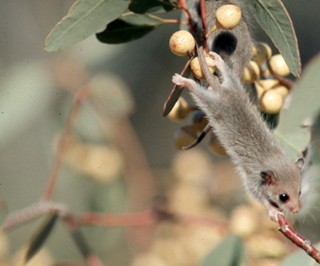
Credit: By Garst, Warren, 1922-2016, photographer BY-SA 4.0, https://commons.wikimedia.org/w/index.php?curid=116363987
Threats to Bogong Moths
- Once so abundant they darkened the skies and covered cave walls, bogong moths have declined sharply in recent decades.
- Since the 1980’s the numbers have steadily decreased, with catastrophic collapses between 2017-2019 when populations dropped by an estimated 99.5% in some regions.
- Annual migrations that once involved billions of moths now arrive in greatly reduced numbers. Caves that held densities of up to 17,000 moths per square meter sometimes show almost none.
- Higher temperatures and drought have reduced the growth of plants that bogong moth caterpillars rely on for food. These caterpillars are the immature stage of the moth, and with less food available, fewer survive to adulthood.
- Pesticides and farming practices have also disrupted larval survival and food availability.
- Light pollution lures migrating moths into cities, fatally disorienting them and pulling them off course.
- The International Union for Conservation of Nature (IUCN) listed bogong moths as endangered in 2021, raising concern for both cultural traditions and the survival of alpine species that rely on them.
- The bogong moth’s migration shows that even highly refined natural systems can be disrupted by environmental change. As scientists continue to uncover how these moths navigate, their survival will depend on conservation efforts that protect both their habitats and the species that rely on them.
Episode Script:
The giant bogong moth has a brain one-tenth the size of a grain of rice. And eyes the diameter of a human hair.
Yet it can navigate by sensing the magnetic field of Earth. Or by gazing at the stars, reading a mental map that it was somehow born with.
Each spring in Australia, they leave the lowlands by the millions, and fly at night over terrain they’ve never seen before, following their internal compass, and that inherited star map.
They’re the only insects we know of that can navigate this way. And they’re all headed to the same place: the cool highlands of the Snowy Mountains, where they sleep away the summer heat in caves.
Historically, they’ve been a keystone species here, with a disproportionately large effect on the ecosystem.
Other animal populations have relied on their annual arrival for food. Aboriginal tribes used to gather in the mountains to harvest and roast moths.
But the bogong has declined precipitously over the last decade. Rising temperatures and drought have reduced their food sources. Pesticides have reduced their numbers. Light pollution from towns and farms has reduced their ability to navigate.
Conservation groups are trying to save the moth, but with so many stressors on their population, that’s hard to do.
Let’s hope they’re successful, because the bogong moth is another overlooked example of the wonders of nature, its interconnectedness, and its vulnerability. I’m Scott Tinker.