
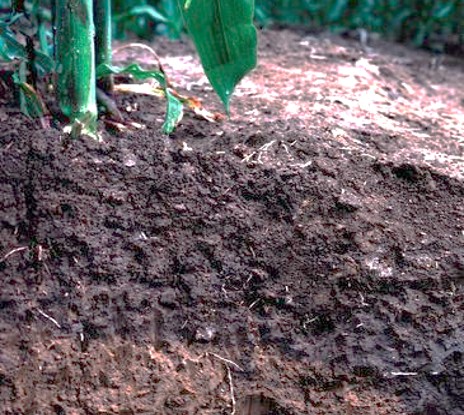
Credit: By Photo by Lynn Betts, USDA Natural Resources Conservation Service. - USDA NRCS Photo Gallery: , Public Domain, https://commons.wikimedia.org/w/index.php?curid=29800218
Background
Synopsis: The ground beneath our feet hides a symphony of sounds with vibrations from insects and plant roots revealing the life within soil. Ecoacoustics is uncovering how these sounds can offer valuable insights into soil health and ecosystem restoration.
- When most people think of nature sounds, they often imagine the chirping of birds, rustling leaves, or waves crashing on the shore. But what about the sounds beneath our feet? The tapping of a millipede’s feet, tree roots moving past rocks, or the grinding jaws of grub larvae?
- Soil, it turns out, has a story to tell. The emerging field of ecoacoustics reveals that the soil beneath our feet is alive with a hidden symphony of sounds, each one providing a glimpse into the life below.
- An early episode of EarthDate, The Secret Life of Soil, explored the vast biodiversity present within soil, from microscopic bacteria and fungi to mites, centipedes, slugs, and worms. Just “a handful of dirt contains more microbes than there are people on Earth and more biodiversity than is found in all the animals (including insects) of the Amazon Basin.”
- Soil is not mere dirt, but rather a highly complex and vital component of Earth. (See EarthDate-29, Digging Soil) Yet, the sounds of the organisms within this hidden world have largely gone unnoticed, until now.
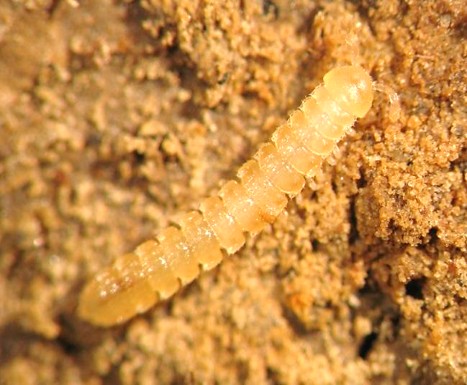
Credit: By Cristina Menta - Cristina Menta (2012). CC BY 3.0, https://commons.wikimedia.org/w/index.php?curid=36735782
- Acoustic ecologists study the relationships between living organisms and their sound environment.
- The field began in the late 1960s when the World Soundscape Project set about studying the relationship between humans and their sound environment, and the impact of sound pollution.
- It has since broadened to encompass the complex relationships between sound, environment, and human society.
- For years, the focus was simply on recording sounds, but scientists began to realize the recordings could also provide a wealth of information about ecosystems, particularly those above ground.
- One curious acoustic ecologist decided to poke a microphone into the soil in a Swiss forest. To his surprise, he heard a burst of sounds in his headphones.
- The underground is surprisingly noisy. Sounds range from water flowing through soil pores to the vibrations of animals moving and communicating. These noises change throughout the day and across the seasons.
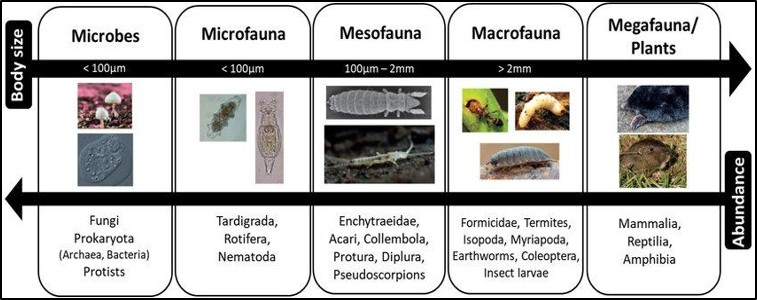
Credit: By Photos from Global Soil Biodiversity Atlas (Orgiazzi et al. 2016); CC BY 2.5, https://commons.wikimedia.org/w/index.php?curid=146005922
- Soon, other scientists began exploring this strange underground world, filled with whirring, scraping, chirping and thumping sounds.
- They discovered that larvae munching on roots emit clicking noises as they eat; worms rustle as they wiggle through tunnels; and plant roots push through the soil at different rates than worms.
- The acoustic complexity of soil changes.
- It increases during the spring and summer months and decreases during the fall and winter.
- Daily, soil is most active in the afternoon, while it falls quiet at night
- Not all sounds are from movement. Some seem to serve other purposes.
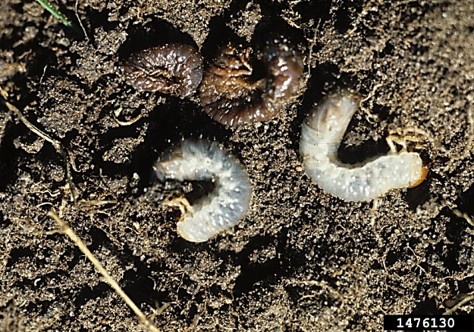
- For example, white grub larvae make creaking noises when rubbing their mandibles together.
- Like bird calls, the buzzing of larvae is unique to each species and the more larvae there are, the more noise they make.
- When larvae pupate, they transition to a new sound, rotating their abdomens inside their shell and striking it against the shell wall.
- These sounds likely serve several functions. They could signal food resources, attract mates, or warn of danger.
- Many animals have adapted to hear vibrations: nocturnal moles have enlarged ear bones, snakes pick up vibrations through sensors in their jaws, and insects can detect ground vibrations with sensors in their legs.
Credit: By Whitney Cranshaw, Colorado State University, Bugwood.org, CC BY 3.0 us, https://commons.wikimedia.org/w/index.php?curid=81321791
- Ecoacoustics has proven useful in understanding ecosystems. Recently, scientists have found that it can also help measure soil health.
- Only about 7.5 percent of Earth’s surface—roughly one-quarter of all land—has the topsoil suitable for agriculture. Yet this thin layer of soil supports about 95 percent of the world’s food production.
- Topsoil takes hundreds to thousands of years to create but can be destroyed in minutes.
- Soil degradation happens when important soil components are lost such as physical qualities, chemical make-up, and biological organisms.
- Human activities such as deforestation, pollution, and urbanization contribute to this destruction.
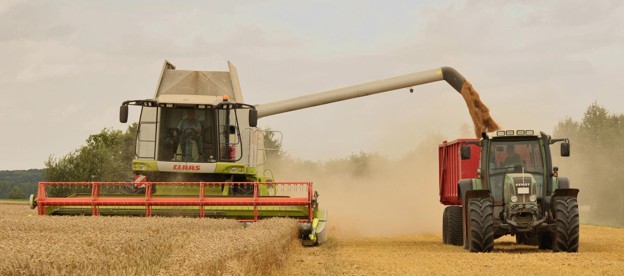
- Farming practices like tilling increase erosion, irrigation increases soil salinity, and monocultures deplete nutrients. Excessive fertilizers and pesticides only exacerbate the problem.
Credit: By Michael Gäbler, CC BY-SA 3.0, https://commons.wikimedia.org/w/index.php?curid=28285629
- How do you assess whether soil is degraded? You listen to it. Researchers collected 240 soil acoustic samples from grassy woodlands, including sites that had been deforested, were undergoing restoration, or had maintained some amount of original vegetation. Then they analyzed the soil’s condition.
- Results showed that deforested sites lacked acoustic complexity and sound diversity compared to healthier, restored soils.
- More studies with different soil types are needed, but a similar study in a temperate forest found the same results.
- The link between soil soundscapes and soil health offers exciting possibilities.
- Ecoacoustics can help assess restoration and biodiversity in a cost-effective, non-invasive way. It could even help quantify the success of forest restoration efforts.
- Some researchers are exploring whether playing “healthy” sounds to a damaged soil could speed up recovery.
- As ecoacoustics continues to develop, scientists identify sounds of specific species, compare soundscapes across soil types, and test how sounds can aid in restoration processes.
- The growing field of ecoacoustics offers a fresh way to understand the life beneath our feet. By listening to soil, scientists are uncovering hidden ecosystems and finding new methods to monitor and restore soil health. These discoveries remind us that soil is a vital, living system, and one worth protecting for the future.
Episode script
Just eight percent of Earth’s surface is covered in topsoil -- but that grows 95 percent of our crops.
And healthy plant growth depends on healthy soil. Which depends on a healthy population of soil life.
As noted in an earlier EarthDate, a single handful of healthy soil contains more microbes than the human population of Earth.
And more biodiversity than the entire Amazon. One handful.
Along with microbes, there are fungi, worms, insects, plant roots, and much more. And they all make noise.
Sixty years ago, ecologists began recording the sounds of nature, to understand what species populate different areas – cataloging, for example, the bird, insect, and animal noises of a forest.
But when one curious scientist poked a microphone into the ground, he was blown away.
Turns out soil life makes noises of its own. From grubs chewing on roots, to worms slithering through tunnels, to millipedes’ feet drumming.
In fact, they realized you can tell a lot about soil health simply by listening to it.
Conversely, degraded soils have less active life, and therefore less sound.
Ecologists now monitor soils with a microphone, helping evaluate their resident lifeforms, crop productivity, and the success of soil replenishment programs.
Their discoveries remind us that soil is a vital, living system, worth protecting for its own sake – and ours.