Credit: By Wendelin Jacober - https://www.flickr.com/photos/91619724@N04/44107588594/, CC0, https://commons.wikimedia.org/w/index.php?curid=88124483
Background
Synopsis: Chernobyl’s exclusion zone is not a pristine refuge, but it is far from lifeless. While radiation continues to harm some organisms, many species have rebounded as human activity disappeared. The region offers rare insight into both the limits and the resilience of living systems.
A Landscape Left Behind
- In April 1986, a reactor explosion at the Chernobyl Nuclear Power Plant released massive radiation and forced more than 100,000 people to abandon their homes.
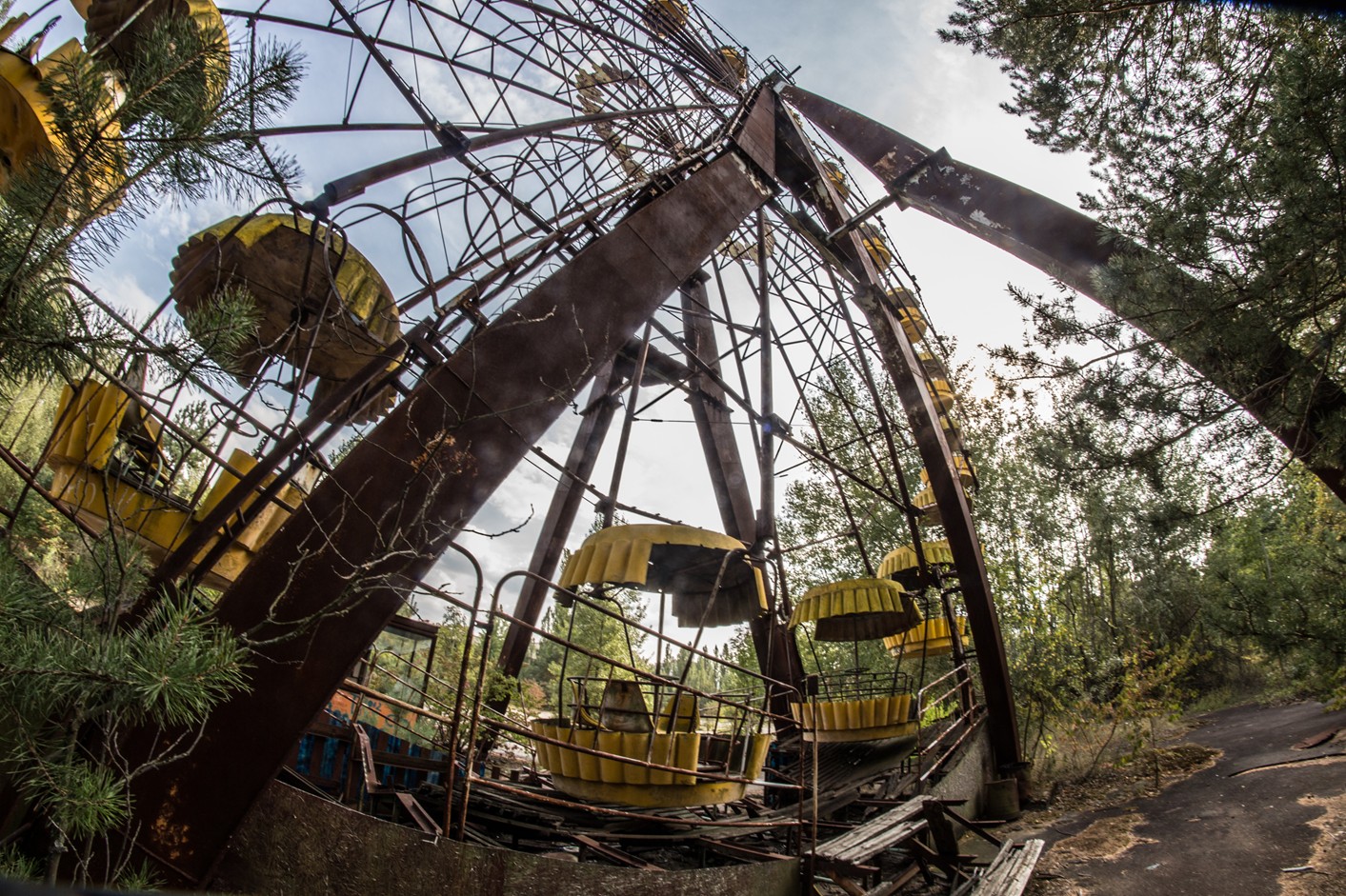
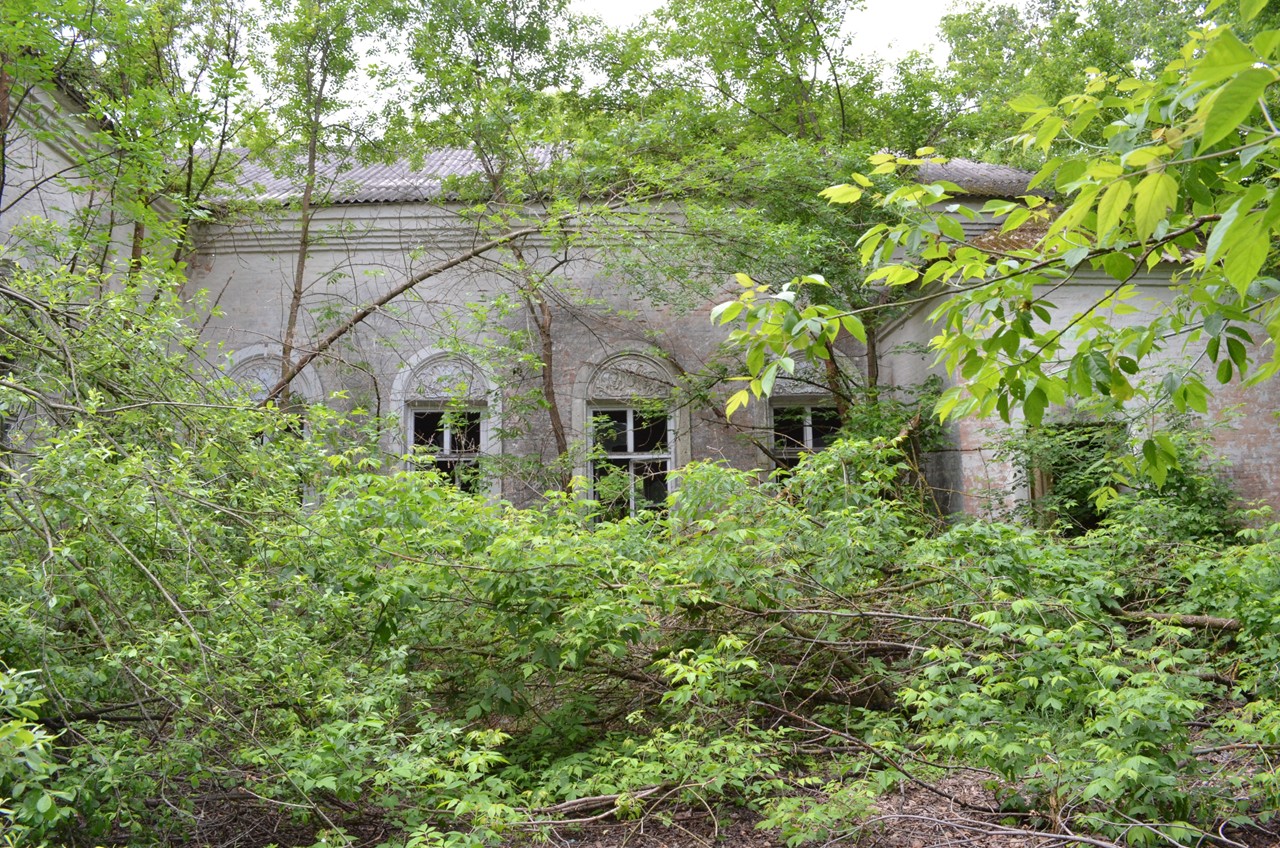
- A thousand-square-mile exclusion zone was established, emptying towns, farms, and forests almost overnight.
- Scientists expected the land to remain biologically devastated for decades, perhaps centuries.
- But as people vanished from the landscape, another story quietly began to unfold.
- In the absence of human activity, wildlife returned, ecosystems reorganized, and life began adapting in ways few had anticipated.
Nature’s Resilience
- The Exclusion Zone covered 2850 square kilometers (1,100 square miles), an area roughly the size of Rhode Island. With people gone, gradually wildlife began to fill the void.
- Large mammals, including brown bears, grey wolves, Eurasian lynx, and European bison, have returned and are flourishing in parts of the zone.
- Golden eagles, white-tailed eagles, black storks, beavers, boars, swans and owls are also widespread, painting a picture of a rich, yet radioactive, ecosystem.
- The area has become surprisingly lush and supports many species despite the lingering contamination.
- Camera-trap surveys suggest that mammal abundances in the Exclusion Zone are now comparable to nearby nature reserves, and wolf populations are especially high, likely due to the absence of hunting.
- Despite the radiation, overall mammal diversity and density have risen, showing that the absence of humans outweighed the environmental cost of radiation in terms of biodiversity.
- In a region thought to be unfit for animals for centuries, the return of a diverse array of wildlife has been a surprise to many.
Credit: By Antanana - Own work, CC BY-SA 3.0, https://commons.wikimedia.org/w/index.php?curid=27356105
Evolutionary Protection
- Scientists have found evidence of radiation’s effects in the region including voles with cataracts, albino barn swallows, and mutated insects. But other species are learning to adapt to the higher levels of radiation.
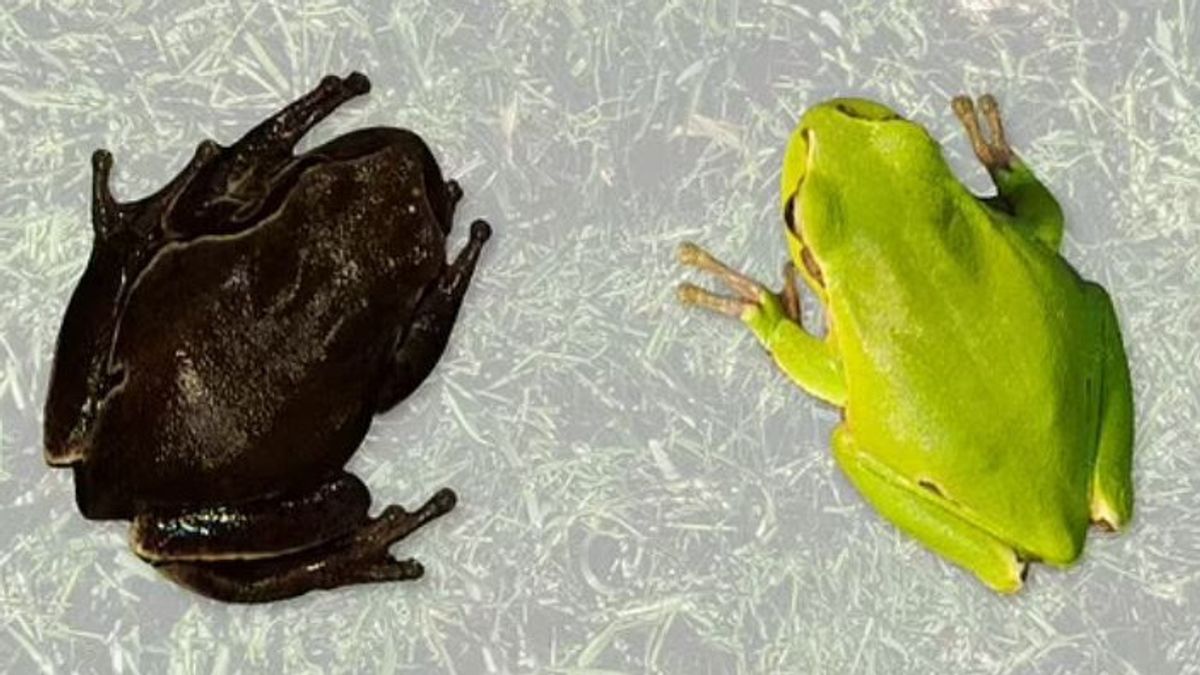
- Scientists found Eastern tree frogs with unusually dark, almost black skin.
- The dark color comes from melanin, a pigment that can reduce radiation damage by absorbing energy and neutralizing harmful molecules.
- Studies of more than 200 frogs show that darker frogs are now common in contaminated areas, likely because they survived better and reproduced after the accident.
- This is an example of directional selection, an evolutionary process where individuals with a beneficial trait, such as dark coloration, survive and reproduce more successfully, making that trait more common in the population over time.
Credit: https://imgsrv2.voi.id/lUyxDnukobLSYWUGVp
Secrets to Survival
- Just as tree frogs in Chernobyl use melanin in their skin for protection, scientists also found black fungi with melanin thriving inside Reactor Four.
- These fungi, such as Cladosporium sphaerosperum, actually grow toward radiation and appear to use it as an energy source, a process called radiosynthesis.
- In these fungi, melanin not only absorbs radiation but also helps turn it into energy, which allows them to grow more quickly in radioactive places.
- This discovery suggests possible future uses, from cleaning up radioactive sites to providing natural radiation shields for space travel.
- In a previous EarthDate, Extreme Nematodes, we learned how these tiny worms survive the harshest conditions, even reawakening after thousands of years frozen.
- To test their response to radiation, scientists collected nematodes from Chernobyl’s Exclusion Zone and cultured them in the lab.
- Researchers sequenced their genomes and compared them with worms from around the world, looking for signs of DNA damage.
- The analysis found no major mutations and no link between radiation levels at collection sites and mutation rates or damage tolerance.
- These results show nematodes are remarkably resistant to radiation and highlight how controlled experiments can reveal why some organisms, and even some humans, are more vulnerable to DNA damage than others.
Credit: By Станіслав ГУМЕНЮК - Own work, CC BY-SA 4.0, https://commons.wikimedia.org/w/index.php?curid=92560157
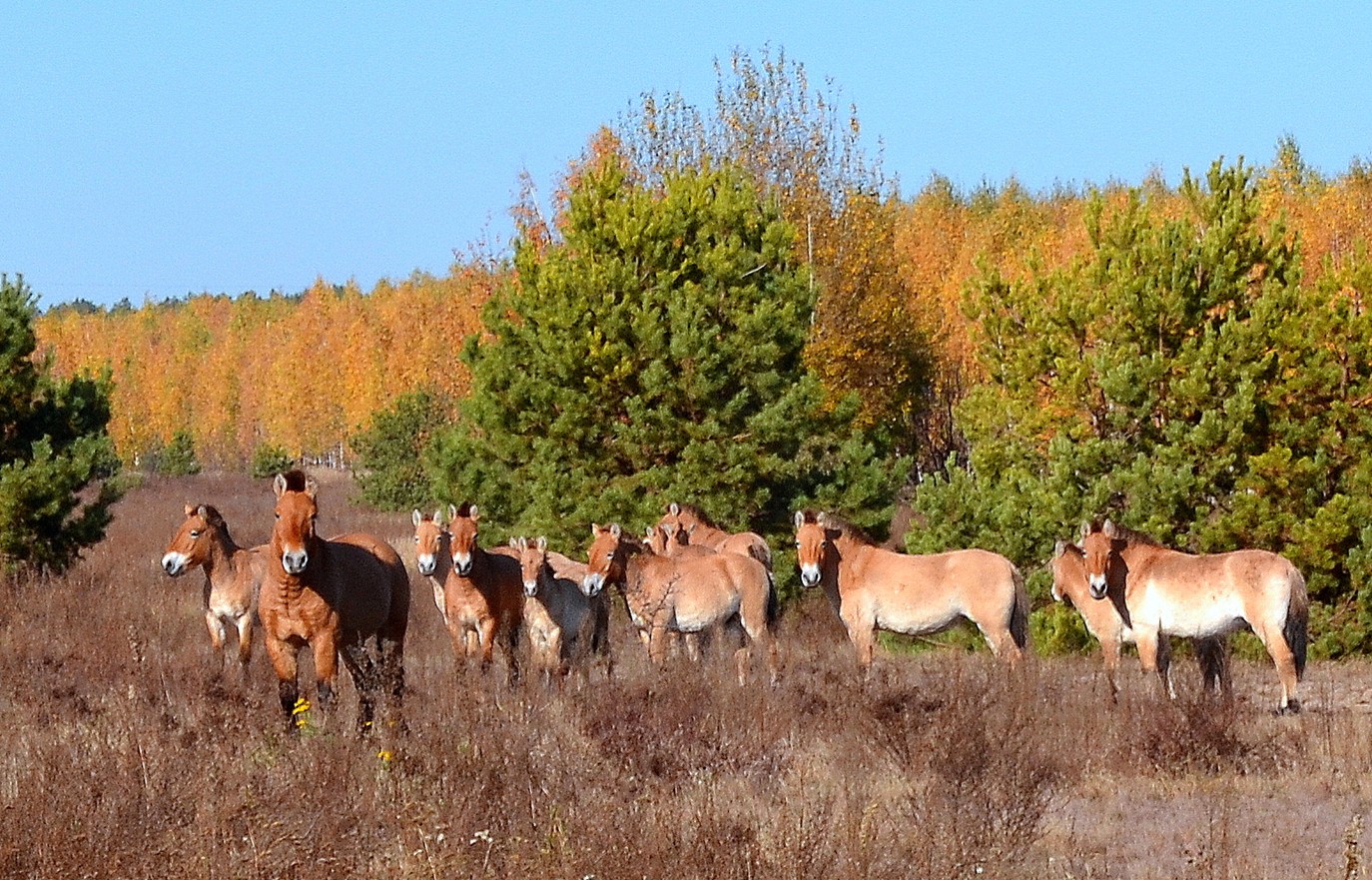
- Just like nematodes appear unscarred, feral dogs in the Exclusion Zone offer another living puzzle. They have distinct genomes, yet it is unclear how, or if, radiation played a role.
- When the reactor accident occurred and thousands of people had to evacuate immediately, many dogs and other pets were left behind. In the years since, large packs of feral dog’s roam throughout the Exclusion Zone.
- A landmark study analyzed DNA from 302 free-roaming dogs near the reactor and compared them to dogs just 10 miles (16 km) away. The dogs showed distinct genetic differences.
- Follow-up research looked closely at chromosomes, genes, and even individual DNA units (known as nucleotides) to see if radiation caused mutations. A surprise to nearly everyone, there was no evidence of radiation-induced genetic damage.
- Despite this, one study did find 52 genes linked to DNA repair, cell cycle control, radiation response, and immune function, suggesting that directional selection or other pressures may have shaped the genomic differences.
- Another factor could be genetic drift or initial survivor traits. The dogs that survived after evacuation may simply have had beneficial genetic variants. Isolation then kept those traits in the population.
- These canine findings highlight how Chernobyl serves as a natural laboratory for studying how mammals respond to extreme environments. The studies may help us understand about how organisms survive in when exposed to radiation, toxins, or other challenges.
Credit: By State agency of Ukraine on Exclusion Zone management - http://dazv.gov.ua/novini-ta-media/vsi-novyny.html, CC BY-SA 4.0, https://commons.wikimedia.org/w/index.php?curid=89254771
Lasting Wounds
- While many examples show life adapting or enduring in Chernobyl, the Red Forest remains a reminder that radiation also leaves deep and lasting wounds.
- This pine forest west of the reactor absorbed such extreme doses in 1986 that the trees turned reddish-brown and died within days.
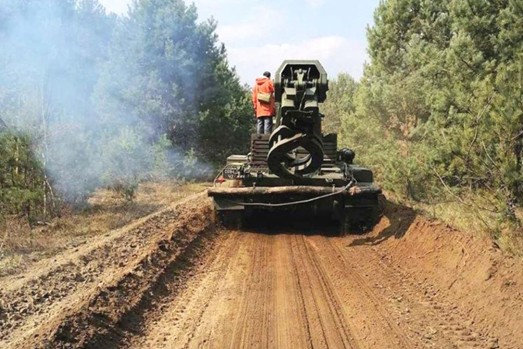
- To prevent radioactive spread and fire-risk, workers buried thousands of trees and scraped away contaminated soil.
- Regrowth here was not the result of natural succession. In the years after the disaster, grasses, shrubs, and young trees were deliberately planted to stabilize the ground.
- Even today, the Red Forest is among the most contaminated places on Earth. Radiation lingers in its soils, mushrooms, and mosses. Decomposition occurs at a slow pace, creating heavy layers of plant litter, and increasing wildfire risk.
- The Red Forest shows both sides of Chernobyl’s legacy. While some species thrive in the absence of people, other ecosystems remain profoundly disrupted.
Lessons Learned
- The Chernobyl disaster highlighted how design flaws and human errors can combine into catastrophe.
- The RBMK reactor had a built-in instability and lacked containment domes required in most nuclear plants worldwide.
- After the incident, international safety standards were strengthened, emphasizing containment structures, operator training, and automatic shutdown systems.
- Today, Chernobyl remains a case study in the importance of transparency, safety culture, and the role of political systems in managing complex technologies.
- Chernobyl was one of the greatest technological disasters of the 20th century, leaving a scar on the land and its people.
- Yet four decades later the Exclusion Zone also tells another story, the surprising ability of life to adapt and recover.
- From frogs with darkened skin to fungi that convert radiation into energy, and from dogs in abandoned towns to the regrowth of the Red Forest, ecosystems have shown remarkable resilience.
- The story of Chernobyl warns us of the dangers of misused technology, yet it also reminds us that nature finds a way to heal and endure.
Episode Script:
After the Chernobyl nuclear accident, the Russian government declared a thousand square miles around it an exclusion zone.
The hundred thousand people evacuated could never return to their homes. The wildlife, however, could.
European bison, which had vanished from the area, returned and populations grew. So did native deer.
These large herbivores brought large predators, like lynx, bear and especially wolves, which had been hunted to near extinction.
Large birds of prey came back too – golden eagles, white tail eagles, black storks and owls. Along with wild boar, beavers and fish in ponds, and rodents of all sizes.
Scientists thought it would take decades. But the diversity and density of animal populations quickly grew to levels of a nature preserve.
Scientists did find some negative effects of the radiation, like cataracts in rodents, and mutated insects.
And some adaptations. A tree frog that naturally has either green or brown skin, had developed nearly black skin – more melanin, which can absorb radiation.
Yet, feral dogs showed no radiation-induced genetic damage.
In fact, most animal populations showed increased radiation, but no mutation beyond normal genetic variance.
The rebound of animal populations at Chernobyl is a study in the resilience of nature, and the surprisingly low impact of radiation upon it.
I’m Scott Tinker.